









Trusted by the Community
Temple Tumble Megaways Return to Player
Best Online Casinos to Play Temple Tumble Megaways
- Quick account creation
- Casino games and sports betting
- Ongoing bonus offers
200% bonus up to ₹100,000
- Fast registration
- Wide game selection
- Quick withdrawals
500% deposit bonus up to ₹150,000 + 430 free spins
- Multiple convenient payment methods
- Access to popular betting markets
- Ongoing bonuses for active players
700% welcome bonus up to ₹40,000
- Quick sign-up with minimal verification
- Balanced casino and sports betting section
- Consistent bonuses and transparent terms
Welcome Bonus 150% on First Deposit
RTP, or Return to Player, is an essential metric in online casino gaming, including slots such as Temple Tumble Megaways. This percentage indicates how much of all wagered funds a game is expected to return to players over time. Understanding RTP helps users select games that match their preferences and risk tolerance. For example, the RTP shows the theoretical return players might expect when playing this slot. Players interested in potential rewards can also review the Temple Tumble Megaways max win to see the highest achievable payout.
What is RTP in Temple Tumble Megaways
RTP, or Return to Player, represents the average percentage of bets that a player could win back over an extended period. An RTP of 96%, for instance, means that over many spins, 96% of total wagers may theoretically be returned. This value does not guarantee short-term outcomes but serves as a guide for expected payouts.
RTP calculation is based on numerous game rounds, accounting for all possible winning combinations and their probabilities. The Random Number Generator (RNG) ensures that each spin in Temple Tumble Megaways is independent and fair, providing a reliable representation of the return to player over time.
Players often prefer slots with higher RTP values, as they generally offer better theoretical returns. While individual sessions can vary, knowing the RTP of Temple Tumble Megaways game RTP can assist in managing bankroll and planning gameplay more strategically.

RTP of Temple Tumble Megaways
Understanding the RTP of Temple Tumble Megaways slot helps players assess potential returns and plan gameplay effectively. RTP, or Return to Player, indicates the average percentage of wagered funds a slot returns over time. The game RTP provides a guideline for long-term outcomes and informs strategic play decisions.
- Determine Total Bets: Start by calculating the total wagers placed on Temple Tumble Megaways.
- Track Total Payouts: Sum all payouts awarded to players during gameplay.
- Compute RTP: Divide total payouts by total bets to find the RTP percentage.
- Analyze Long-Term Trends: RTP reflects extended play sessions, not individual spins.
- Consult Official Sources: Review the developer’s information for the stated RTP.
- Account for Volatility: Consider game variance, as higher volatility can affect short-term RTP perception.
Knowing the Temple Tumble Megaways return to player allows for better bankroll management and session planning. Players can also refer to the max win to understand the slot’s potential top payout alongside its RTP.
Factors Influencing Temple Tumble Megaways Game RTP
Understanding what affects the Temple Tumble Megaways game RTP is important for players seeking to optimize their sessions. RTP (Return to Player) represents the average percentage of wagers a slot is expected to return over time, but several factors can influence this value.
- Volatility: The Temple Tumble Megaways RTP is impacted by volatility. High volatility increases potential win size but can result in less frequent payouts, affecting short-term results.
- Bet Size: Different wager levels can slightly affect RTP outcomes. Larger bets may lead to higher wins but increase overall risk and affect balance fluctuations.
- Session Duration: The length of gameplay determines how closely observed results match the theoretical RTP. Short sessions may vary, while longer sessions better reflect expected returns.
- Bonus Features: Activating features such as free spins and multipliers can temporarily alter payout patterns, influencing perceived RTP.
- Game Mechanics: Mechanics specific to Temple Tumble Megaways, like cascading reels, affect win frequency and combinations, indirectly shaping the RTP experience.
- Payout Frequency: How often the game distributes wins impacts RTP perception, with frequent small wins or rare large wins creating different gameplay experiences.
Together, these factors define the Temple Tumble Megaways return to player. Understanding their interaction helps players make informed decisions and better manage expectations during both short and extended gameplay sessions.
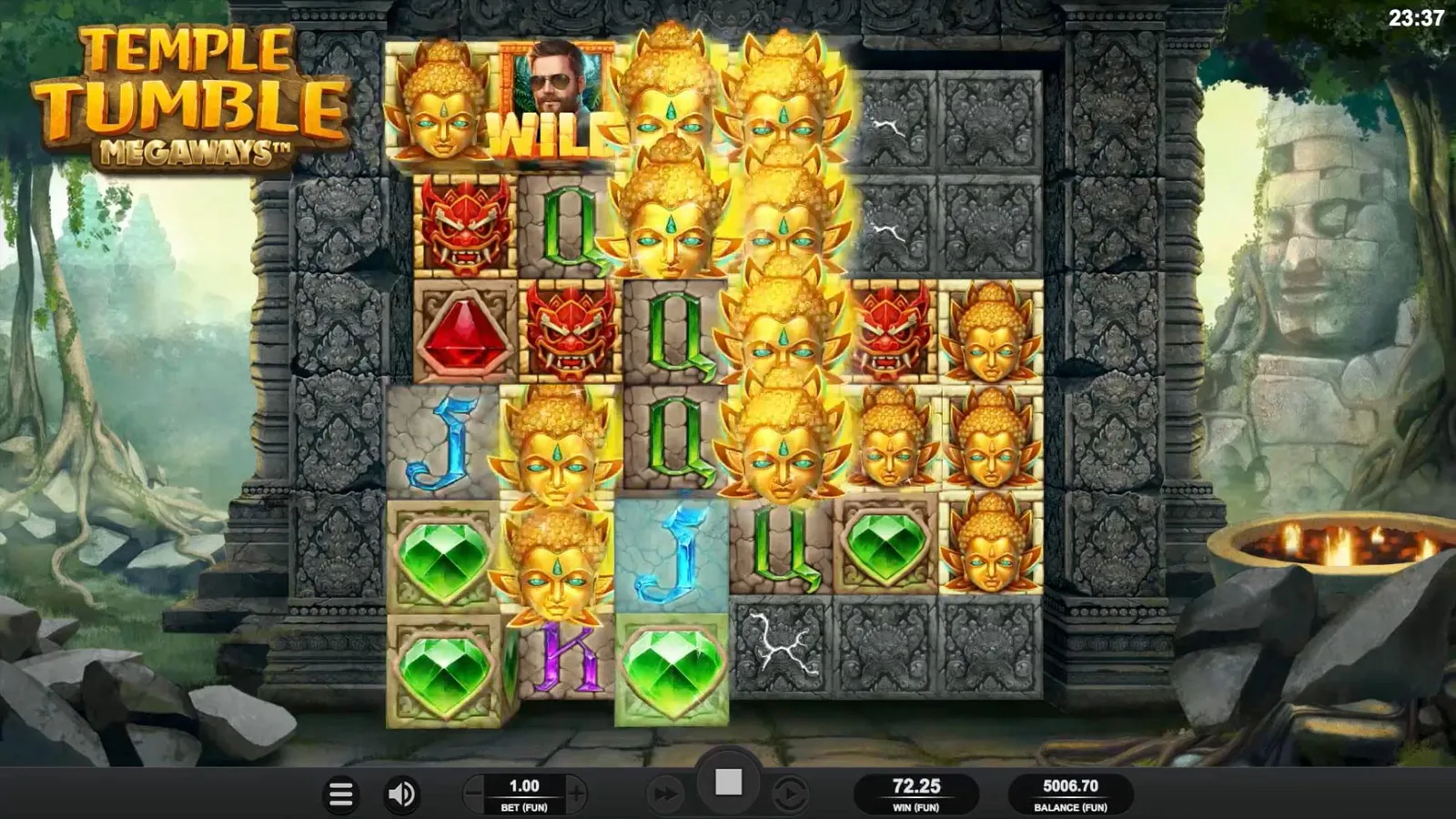
Temple Tumble Megaways RTP: Understanding Statistical Variability
The RTP, or Return to Player, of Temple Tumble Megaways represents a long-term expected return rather than a guaranteed outcome for individual sessions. Understanding how RTP of functions helps explain why results may vary in the short term.
- Randomness: Each spin is governed by a Random Number Generator (RNG), ensuring outcomes are independent and unpredictable.
- Variance: The slot’s variance affects both the size and frequency of payouts, creating fluctuations between sessions.
- Probability Distribution: Payout structures influence how often wins occur and their relative value.
- Long-term Expectation: RTP indicates expected returns over a large number of spins, not single-session results.
- Session Duration: Shorter play periods may show significant deviation from the theoretical RTP.
Overall, the Temple Tumble Megaways return to player provides insight into potential long-term returns. While it does not predict individual spins, understanding the game RTP clarifies the role of randomness and variance in shaping gameplay outcomes.
Understanding Temple Tumble Megaways RTP
Understanding the RTP is important for planning gameplay. RTP, or Return to Player, indicates the percentage of wagered money that the slot is expected to return over time. For Temple Tumble Megaways, knowing this metric helps players assess potential returns and risks before starting their session.
- Evaluate Long-Term Returns: The Temple Tumble Megaways game RTP provides insight into long-term payout potential, allowing players to plan a balanced wagering strategy.
- Set Realistic Goals: Understanding RTP helps manage expectations, focusing on sustainable play rather than aiming for unlikely short-term wins.
- Adjust Bet Sizes: RTP information can guide selection of bet levels, supporting bankroll management and session longevity.
- Plan Sessions: Consider RTP when choosing session length; games with higher RTP may align better with fixed-playtime strategies.
- Compare Slots: Use RTP data to evaluate Temple Tumble Megaways against other slots, selecting the game that matches individual strategy and risk preference.
- Bankroll Management: Incorporate RTP knowledge into overall bankroll control, structuring bets and session duration according to expected returns.
Overall, using Temple Tumble Megaways RTP as a reference helps players make informed decisions while maintaining responsible play. RTP is a guide for strategy, not a guarantee of outcomes, and should be considered alongside entertainment and risk management.
FAQs
What does RTP mean in Temple Tumble Megaways?
RTP stands for Return to Player and indicates the theoretical percentage of wagered funds returned over time.
What is the RTP of Temple Tumble Megaways?
The Temple Tumble Megaways RTP is approximately 96.25%, representing expected returns during extended gameplay sessions.
Does RTP guarantee wins in a session?
No, RTP reflects long-term averages and does not predict short-term results or individual spin outcomes.
How does volatility affect RTP?
Higher volatility can lead to less frequent but larger wins, impacting how the Temple Tumble Megaways return to player is experienced during a session.
Can RTP help with bankroll management?
Yes, knowing the RTP helps players plan bet sizes, session length, and manage risks effectively over time.
Is RTP consistent across demo and real play?
Temple Tumble Megaways game RTP remains the same in both demo and real-money modes, though actual session outcomes can vary due to randomness.